Taste of the Square: How Patan’s Streets Feed Your Soul
You know that feeling when you stumble upon a tiny square in a foreign city and suddenly everything clicks? In Patan, Nepal, it’s not just the temples or alleys—it’s the smell of sizzling spices, the laughter around street grills, and the way food turns public spaces into living rooms. I never expected my taste buds to guide me so deeply into a culture. This is more than a meal—it’s connection, served hot. The moment you step into Patan Durbar Square, you are no longer a visitor. You are part of a rhythm centuries in the making, where the scent of roasted cumin and simmering lentils pulls you into conversations, shared stools, and stories told between bites. Here, food is not an afterthought to sightseeing. It is the very pulse of place.
Arrival in Patan: First Bites, First Impressions
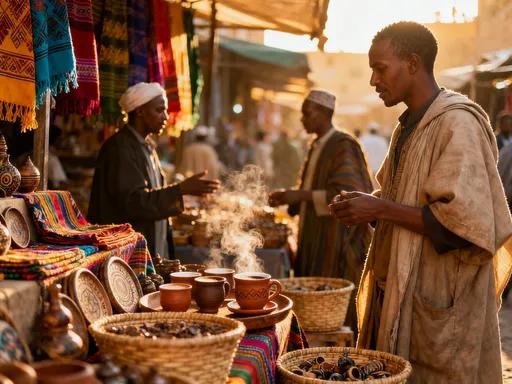
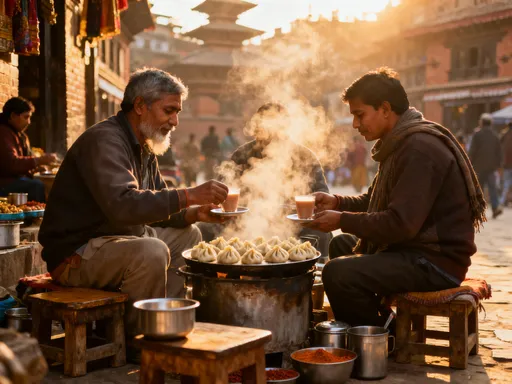
Stepping into Patan Durbar Square is like entering a living museum where history doesn’t sit behind glass—it cooks, breathes, and spills into the streets. The first thing that greets you isn’t a monument, though the intricately carved temples rise gracefully all around. It’s the aroma—warm, buttery, and deeply spiced—that winds through the air, guiding your steps toward clusters of people gathered around low wooden tables or squatting on stone benches. Street vendors in simple cotton clothes stir large iron pans over charcoal stoves, their hands moving with the confidence of generations. A woman flips golden-brown sel roti, a rice-flour doughnut with a crisp crust and soft center, while another ladles steaming potato curry into banana leaves. These are not performances for tourists. They are the everyday rituals of a city that eats in public, together.
For many travelers, the first taste of Patan is momo—steamed dumplings filled with spiced buffalo or vegetables, served with a fiery tomato and sesame chutney. But the real lesson isn’t in the flavor alone. It’s in how you eat it. There are no formal restaurants lining the main square, no menus or reservations. You point, smile, and accept the small plate handed to you. You sit where there’s space—often beside a local student on a lunch break or an elderly craftsman taking a midday pause. This immediacy dissolves the usual barriers between observer and participant. Within minutes, you’re not watching life unfold. You’re in it, one bite at a time.
The square itself functions as a communal dining room, shaped by centuries of shared meals. Stone courtyards, once used for royal ceremonies, now host families sharing plates of chatamari, a savory buckwheat crepe topped with egg and herbs. Children run between tables, dodging steam from noodle pots, while monks in maroon robes pause to sip chiya—spiced milk tea—before returning to temple grounds. There’s no rush, no pressure to finish and leave. Meals unfold slowly, often lasting an hour or more, as conversations ebb and flow like the foot traffic around them. This is not fast food. It is deep food—nourishment that feeds more than the body.
The Heartbeat of Public Life: Why Squares Cook Up Community
Patan’s public spaces do not exist merely for aesthetic or ceremonial purposes. They are lived-in, used, and constantly animated by the rhythms of daily life. The square is not a backdrop. It is a stage where the ordinary becomes sacred through repetition and presence. Every morning, before the sun fully clears the rooftops, elderly women arrive with baskets of vegetables, setting up small stalls that double as social hubs. Teenagers on their way to school stop for a warm roll stuffed with spiced potatoes, exchanging quick jokes with the vendor who’s known them since childhood. By midday, the same spots are filled with workers from nearby workshops, their hands stained with clay or metal dust, now cradling bowls of lentil soup.
What makes this so powerful is its authenticity. Unlike many tourist-centered destinations where culture is packaged and sold, Patan’s food culture resists commodification. There are no themed dining experiences or curated ‘cultural shows.’ Instead, there is only the real: a grandmother teaching her granddaughter how to fold momo wrappers, a group of friends debating politics over shared platters of daal bhat, or a traveler welcomed with an extra spoon and an invitation to try something new. The square operates on an unspoken code of inclusion—so long as you approach with respect, you are allowed in.
This organic flow is possible because the city’s design prioritizes human interaction over efficiency or speed. Narrow alleyways lead to open courtyards, each with its own micro-economy of food and fellowship. A single block might contain a centuries-old temple, a family-run metal workshop, and three different food vendors, each specializing in a seasonal dish. There are no chains, no franchises, no neon signs. The economy here is personal, built on trust, reputation, and the quality of one’s cooking. When you buy a snack from a vendor, you’re not just purchasing food. You’re participating in a system of mutual care that has sustained this community for generations.
From Temple Steps to Food Stalls: Sacred and Savory Side by Side
In Patan, the boundary between the sacred and the everyday is not a wall—it’s a doorway, often left open. Temples are not isolated from daily life. They are woven into it, and so is food. It’s common to see monks receiving offerings of steamed momos or plates of rice pudding directly at temple entrances, just as families gather on nearby steps to enjoy their own meals. There is no contradiction in this. In fact, the two are deeply connected. Food is not only sustenance; it is a form of devotion, a way of sharing blessings with others.
During festivals like Indra Jatra or Tihar, this connection becomes even more visible. The entire square transforms into an open-air kitchen, where communities prepare large pots of kwati, a nutritious soup made from nine types of soaked beans, traditionally eaten during monsoon season for strength and immunity. These meals are not sold. They are offered freely to anyone who passes by—locals, pilgrims, travelers. The act of cooking and sharing becomes a collective prayer, a way of honoring both the divine and the human. Even in quieter times, the presence of food near religious sites underscores a core belief: that nourishment, like spirituality, is meant to be shared.
The temple courtyards themselves often double as informal dining areas. After making offerings, families spread cloths on the cool stone floors and unpack tiffin boxes filled with homemade dishes—marinated greens, pickled radishes, spiced yogurt. The smell of mustard oil and turmeric mingles with incense. Children eat with their hands, their faces glowing in the afternoon light. There is no separation between worship and mealtime. Both are acts of gratitude, both are rooted in presence. In this way, Patan teaches a quiet but profound lesson: that holiness is not found only in silence or solitude, but also in the sound of laughter around a shared plate.
What Makes a Meal in Patan Unique? Flavors That Tell Stories
The cuisine of Patan is not defined by complexity or extravagance. It is defined by meaning. Every dish carries a story—of season, of family, of survival. Take yomari, for example, a delicately shaped dumpling made of rice flour and filled with molasses and sesame. Traditionally prepared during the Yomari Punhi festival in December, it is more than a seasonal treat. It is a symbol of harvest, of gratitude, of the bond between parent and child. In some households, parents hide yomari around the house for children to find, turning the meal into a ritual of joy and discovery. When you eat yomari in the square during the festival, you’re not just tasting sweetness. You’re tasting memory.
Then there is aloo tama, a sour and savory stew made from potatoes, bamboo shoots, and black-eyed peas. Its tangy flavor comes from fermented bamboo, a preservation method born out of necessity in a region with long monsoon seasons. This dish, often dismissed by outsiders for its strong aroma, is a favorite among locals for its depth and comfort. It is typically prepared by older women in family kitchens and brought to the square in large containers to share. To eat aloo tama is to taste resilience—a recipe shaped by climate, terrain, and time.
Kwati, the nine-bean soup, tells a similar story. Each bean is soaked and cooked slowly, often overnight, to maximize nutrition. It is traditionally eaten during Gun Punhi, the full moon day of the month of Jestha, believed to strengthen the body after the winter. The preparation is labor-intensive, requiring patience and care. But the result is more than a meal. It is a declaration of care—for one’s family, one’s community, one’s health. When vendors serve kwati in the square, they are not just selling soup. They are passing down a legacy of wellness, one bowl at a time.
These dishes are not confined to homes. They live in the public realm, where recipes are exchanged not through cookbooks, but through observation and participation. A young woman might learn to fold yomari by watching her neighbor at a festival. A traveler might pick up the rhythm of stirring daal by standing beside a cook for a few minutes. In Patan, culinary knowledge is not hoarded. It is shared freely, like the food itself.
Eating Like a Local: Where to Sit, What to Try, How to Join In
For visitors, the key to experiencing Patan’s food culture is not in following a guidebook, but in learning to be present. There are no formal rules, but there are quiet cues. Begin by observing. Notice where people gather, where steam rises most densely, where laughter rings loudest. These are your best indicators of quality and authenticity. Don’t rush to order. Instead, take a moment to watch how others eat. You’ll see that meals are often shared, plates passed around, spoons exchanged without hesitation. This is not just about food. It’s about trust.
When you’re ready to join in, start simple. Point to what someone else is eating and offer a smile. Most vendors speak enough English for basics, but even without words, kindness translates. A nod, a gesture, a willingness to try something unfamiliar—these are the currencies of connection here. Don’t be afraid to sit on the ground or a low stool. Comfort is not measured by cushioning, but by company. If someone offers you a spoon or a seat, accept it graciously. These small gestures are invitations into the community, not mere politeness.
Start with chiya, the spiced milk tea served in small glasses. It’s warm, sweet, and infused with cardamom and ginger—a perfect introduction to the flavor palette of the region. From there, try a simple plate of sel roti and potato curry. Notice the texture—the slight crunch of the doughnut giving way to a soft, airy center. Eat with your hands when possible. The tactile experience deepens the connection to the food. As you gain confidence, move on to more complex dishes like kwati or yomari, especially if you’re visiting during a festival.
And above all, take your time. Meals in Patan are not transactions. They are events. Sit for thirty minutes, an hour, even longer. Let the rhythm of the square seep into your bones. You’ll find that the longer you stay, the more you’re seen not as a tourist, but as a guest. And in this culture, guests are treated with warmth, generosity, and care.
Beyond the Plate: How Food Shapes Urban Experience
Patan’s food culture cannot be separated from its urban fabric. The city’s layout—narrow alleys, hidden courtyards, open plazas—is not accidental. It is designed to encourage encounter, to slow movement, to create spaces where people naturally gather. And where people gather, food follows. A small alleyway might seem empty at first glance, but follow the scent of frying garlic, and you’ll find a woman selling steaming plates of thukpa, a noodle soup popular in the Himalayan region. A quiet courtyard, shaded by ancient trees, becomes alive at noon with the clatter of bowls and the hum of conversation.
This human-scaled design fosters a sense of safety and belonging. Unlike modern plazas that feel vast and impersonal, Patan’s spaces are intimate. You can see your neighbors, hear their voices, share their meals. Street vendors are not pushed to the margins. They are central to the city’s identity, their stalls forming the heartbeat of daily life. Their presence ensures that public space is not just for walking through, but for living in.
Festival seasons amplify this effect. During Dashain or Tihar, the entire city transforms. Temporary kitchens spring up in courtyards, families cook together in the open, and the air fills with the scent of roasted meat, sweet rice, and spiced syrup. The streets become rivers of food, flowing from home to temple to square. In these moments, the city feels not like a collection of buildings, but like a single, breathing organism—fed by tradition, sustained by community.
This model offers a powerful alternative to the sterile, commercial plazas found in many modern cities—spaces designed for surveillance, consumption, and transit, rather than connection. In Patan, urban planning feels intentional not because it follows a blueprint, but because it follows life. Where people eat together, they stay together. And where they stay together, they build something lasting.
Why This Matters: Preserving Public Flavor in a Fast-Moving World
In an age of globalized chains, drive-thrus, and digital isolation, places like Patan offer a rare and vital reminder: that food is not just fuel, but a foundation for community. The square, with its open-air kitchens and shared tables, stands in quiet defiance of a world that increasingly prioritizes speed, privacy, and convenience over connection. Here, meals are slow, public, and deeply social. They are not eaten alone, scrolling through a screen, but aloud, laughing, debating, remembering.
This way of life is not frozen in time. It is fragile. Urban development, tourism pressures, and changing lifestyles threaten to replace these organic food spaces with standardized eateries and sanitized plazas. Yet, the resilience of Patan’s culture lies in its rootedness. These practices are not performances. They are necessities—ways of sustaining identity, health, and belonging in a rapidly changing world.
For travelers, the lesson is clear: when you visit a place like Patan, you are not just consuming a culture. You are being invited into it. Every bite of momo, every sip of chiya, every shared smile over a plate of yomari is an act of participation. And in return, you receive something invaluable—not just a memory, but a sense of belonging.
More broadly, Patan offers a blueprint for how cities everywhere could be designed—not for efficiency alone, but for humanity. Imagine public spaces where food brings people together, where elders teach children recipes on stone steps, where strangers become guests. This is not nostalgia. It is possibility. It is proof that even in a fast-moving world, there is still room for meals that feed the soul. In Patan, that room has a name: the square. And it’s always open.