Hidden Gems & Local Treasures: My Offbeat Shopping Adventure in Sendai
Wandering through Sendai, I didn’t expect to find such unique shopping experiences tucked away from the crowds. Forget generic malls—here, it’s all about handmade crafts, quiet alleyway boutiques, and markets bursting with local soul. This is shopping that feels personal, authentic, and refreshingly different. If you’re craving a travel moment that’s truly off the beaten path, let me take you where the locals go. In a city often overlooked as a transit point to the scenic Tohoku region, a quieter, more intimate form of discovery awaits—one woven through backstreets, morning markets, and the studios of artisans keeping centuries-old traditions alive.
Beyond the Tourist Trail: Why Sendai’s Shopping Scene Stands Out
Sendai, the largest city in Japan’s Tohoku region, is often seen as a practical stopover rather than a destination in itself. Yet beneath its modern skyline and efficient transit system lies a cultural heartbeat that pulses strongest in its local markets, family-run shops, and quiet artisan corners. Unlike the bustling commercial districts of Tokyo or Osaka, where global brands dominate, Sendai’s shopping culture is grounded in community, tradition, and a deep respect for craftsmanship. It’s a city where the rhythm of daily life is reflected in its stores—not curated for tourists, but shaped by generations of local taste and resilience.
What sets Sendai apart is its ability to balance urban convenience with regional authenticity. While department stores like Sendai Parco and AER offer familiar comforts, the true character of the city reveals itself in places where handmade goods are sold with pride, and shopkeepers remember regular customers by name. These are spaces where visitors can step into the fabric of local life, not as observers, but as participants. The appeal of such an experience goes beyond souvenirs; it’s about connection—touching a piece of hand-carved wood, smelling freshly ground tea leaves, or listening to a potter describe the firing process of a ceramic bowl.
For travelers seeking depth over spectacle, Sendai offers a refreshing alternative to the well-trodden paths. Its shopping landscape is not defined by luxury labels or flashy displays, but by quiet dedication to quality and heritage. This authenticity is especially valuable in an age when so many destinations risk becoming homogenized. In Sendai, you won’t find mass-produced trinkets labeled “local style.” Instead, you’ll encounter real stories—of families preserving weaving techniques, farmers growing organic produce, and designers reinterpreting traditional patterns for modern homes. These are the moments that transform a simple purchase into a meaningful memory.
Sendai’s Best-Kept Secret: The Art of Craftsmanship in Narrow Alleys
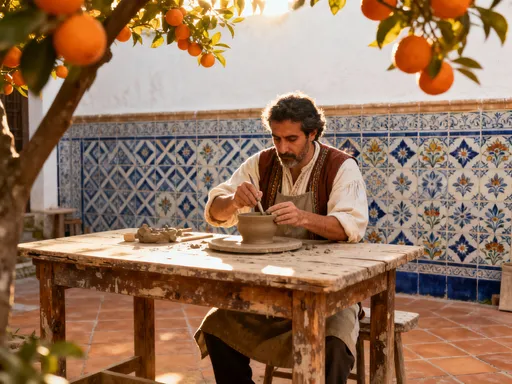
Just a short walk from the bustling Kotodai Park area, tucked between residential buildings and quiet side streets, lie some of Sendai’s most treasured creative spaces—small studios and workshops where artisans practice their crafts with quiet focus. These are not storefronts designed for foot traffic, but intimate spaces where visitors are welcomed like guests. In neighborhoods like Aoba Ward, the tradition of handmade excellence thrives in unassuming settings: a ceramicist shaping bowls from local clay, a textile artist hand-dyeing silk with natural pigments, or a woodworker polishing a lacquered box using techniques passed down through generations.
One such workshop specializes in kogin-zashi, a form of geometric sashiko embroidery that originated in northern Japan as a way to reinforce and warm clothing. Though traditionally associated with Aomori, the technique has found new life in Sendai through local artisans who blend its heritage with contemporary design. In a small studio lit by soft morning light, a master embroiderer demonstrates how each stitch follows a precise pattern, creating intricate textures that are both functional and artistic. Visitors are invited to try a few stitches themselves, guided by patient hands that speak of decades of practice.
What makes these encounters so powerful is the personal connection they foster. Unlike in larger retail environments, there’s time for conversation—about the origin of materials, the challenges of sustaining a craft, or the joy of seeing a piece find its home. Many artisans welcome visitors with tea and a quiet humility, never rushing a sale but instead sharing their passion freely. A hand-carved wooden spoon, for example, might come with a story about the cherry tree it was made from, felled after a storm in a nearby forest. These narratives transform objects into heirlooms, imbued with meaning far beyond their physical form.
Exploring these hidden workshops requires a willingness to wander without a strict itinerary. There are no flashy signs or tourist maps pointing the way—just subtle cues: a display in a window, a handwritten notice in Japanese, or the faint scent of sawdust drifting from an open door. But for those who take the time to look, the reward is a deeper understanding of what craftsmanship truly means—not as a commodity, but as a way of life.
Morning Markets with a Soul: Experience the Pulse of Local Life at Sendai’s Hidden Markets
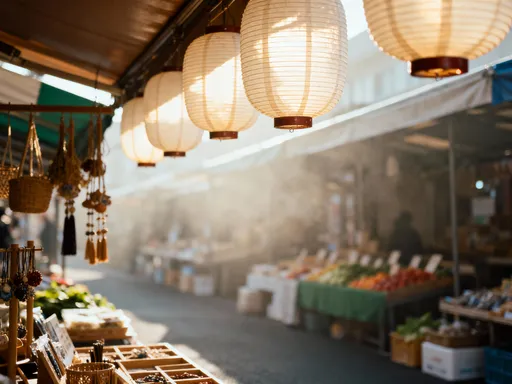
If the soul of a city can be found anywhere, it’s in its morning markets. In Sendai, these vibrant gatherings offer a sensory immersion into the rhythms of everyday life. While the famous Aoba Shrine flea market draws weekend crowds, quieter, more intimate markets like the Asaichi at Tomiyoshi provide a truer glimpse into local culture. Held in small community centers or parking lots on weekday mornings, these markets are where farmers, bakers, and craft makers come together to sell what they’ve grown, baked, or created—often within the past 24 hours.
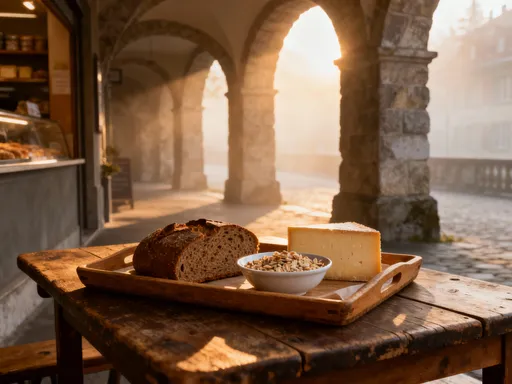
The experience begins with the smell—freshly steamed rice buns wrapped in bamboo leaves, the tang of pickled vegetables stored in glass jars, the earthy aroma of mushrooms foraged from nearby hills. Vendors greet regulars by name, exchanging pleasantries while handing over bundles of leafy greens or homemade miso paste. Unlike supermarkets, where produce is standardized and anonymous, here every item carries a story. A basket of sweet potatoes might come from a farm just outside the city, tended by a couple who switched from office jobs to organic farming a decade ago. A jar of wild plum jam could be the result of a grandmother’s summer harvest, preserved using her mother’s recipe.
Beyond food, these markets often feature local artisans selling handmade soaps, woven baskets, or pottery. One vendor at the Tomiyoshi market specializes in Miyagi washi, a delicate paper made from mulberry fibers that has been produced in the region for centuries. She demonstrates how the paper is formed by hand, layer by layer, and explains its uses—from calligraphy to lampshades. Customers are encouraged to touch the paper, feeling its texture and strength, before deciding whether to take a sheet or two home.
Shopping at these markets is not a transactional experience; it’s a moment of exchange. Language may be a barrier for some visitors, but smiles, gestures, and shared appreciation for quality bridge the gap. Many vendors appreciate the effort of a simple “arigatou” or “oishii” (delicious), and some carry small translation cards to help communicate. The pace is slow, the atmosphere warm—there’s no pressure to buy, only an invitation to engage. For travelers, especially those accustomed to fast-paced urban shopping, this is a reminder that commerce can be gentle, personal, and deeply human.
Boutique Hopping in Hidden Corners: Where Style Meets Authenticity
While Sendai may not be known as a fashion capital, a quiet creative movement is unfolding in its lesser-known districts. Scattered across neighborhoods like Hirose-dori and Nagamachi, a new generation of designers and entrepreneurs is redefining what local style means. These are not high-end boutiques with curated lighting and silent attendants, but independent shops filled with personality—places where vintage kimonos are repurposed into modern jackets, or where eco-friendly home goods are displayed alongside hand-thrown ceramics.
One such store, nestled in a narrow alley near a quiet temple, specializes in upcycled clothing. The owner, a former textile designer, collects old kimonos and obis, carefully dismantling them to create new garments that honor their history while embracing contemporary silhouettes. A red silk obi becomes the trim on a linen coat; a faded indigo kimono is reborn as a flowing dress. Each piece is one-of-a-kind, labeled with a small tag describing its origin—“Meiji-era weave, repurposed 2023.” Customers, both local and visiting, appreciate not only the design but the sustainability behind it.
Other shops focus on lifestyle curation, offering a blend of local crafts and thoughtfully selected imports. A boutique in Nagamachi, run by a young couple who returned to Sendai after years in Kyoto, features handmade soy candles, bamboo toothbrushes, and notebooks bound in washi paper. The space doubles as a small café, where visitors can sip matcha while browsing. The owners believe in “slow living”—a philosophy reflected in their inventory, their pace, and their interactions with customers. They don’t push sales; instead, they invite people to linger, to touch, to imagine how a product might fit into their daily lives.
What unites these boutiques is a shared ethos: authenticity over trend, quality over quantity. They are not chasing viral popularity or mass appeal. Instead, they cater to a discerning audience that values intentionality—people who care where things come from, how they’re made, and who made them. For the traveler, exploring these spaces feels like uncovering a secret, a glimpse into a side of Japan that resists fast fashion and disposable culture. It’s shopping with a conscience, where every purchase supports a vision, not just a business.
How to Shop Like a Local: Practical Tips for Offbeat Explorers
Discovering Sendai’s hidden shopping gems requires more than a map—it demands curiosity, patience, and a willingness to engage on local terms. The good news is that these experiences are accessible to anyone willing to step slightly off the usual path. Public transportation in Sendai is efficient and well-marked, with clear signage in English at major stations. The subway and bus networks connect the city center to residential neighborhoods where many of these small shops and markets are located. However, some of the best finds are within walking distance of each other, particularly in the Aoba and Wakabayashi wards, making a self-guided walking tour an ideal way to explore.
Timing matters. Morning markets like the one in Tomiyoshi are typically held on weekday mornings, often between 8 a.m. and noon, so early risers are rewarded with the freshest produce and the liveliest atmosphere. Artisan workshops and boutiques tend to open around 10 a.m. and stay open until 6 or 7 p.m., though hours can vary, especially in smaller operations. It’s wise to check ahead if possible, though many shops post their hours in the window or on a simple sign outside. Sundays are popular for larger craft fairs and seasonal events, often held in community centers or public parks.
When it comes to payment, cash is still king in many small establishments. While larger boutiques and department stores accept credit cards, local markets and independent artisans often operate on a cash-only basis. Carrying a modest amount of yen in smaller denominations—1,000 and 500-yen coins—makes transactions smoother and shows respect for local customs. That said, digital payment options like PayPay are becoming more common, especially among younger vendors, so it’s worth having the app ready just in case.
Language doesn’t have to be a barrier. While not all shopkeepers speak English, most appreciate the effort of a few basic Japanese phrases. Simple greetings like “Konnichiwa” (hello) and “Arigatou gozaimasu” (thank you) go a long way. Carrying a small phrasebook or using a translation app can help with more detailed questions. More importantly, non-verbal communication—smiles, gestures, pointing—can be surprisingly effective. Many artisans are delighted when visitors show genuine interest, even if they can’t fully express it in words. The key is to move slowly, observe, and let the experience unfold naturally.
When Tradition Meets Today: The Evolution of Sendai’s Craft Culture
The crafts of Sendai are not relics of the past; they are living traditions adapting to modern life. Take Sendai tansu, the region’s famed lacquered chests of drawers, once essential in every household for storing clothing and valuables. Traditionally made with durable paulownia wood and intricate metal fittings, these pieces were built to last generations. Today, while fewer families use them for storage, their beauty and craftsmanship have found new appreciation. Contemporary designers are reimagining tansu as statement furniture—scaled-down versions for urban apartments, or repurposed as display cabinets in modern homes.
This evolution is not about abandoning tradition, but about ensuring its survival. Artisans recognize that for crafts to endure, they must remain relevant. A young woodworker in Aoba Ward, trained by his grandfather, now offers custom tansu with minimalist designs that appeal to younger buyers. He uses traditional joinery and natural lacquer but offers neutral finishes that blend with Scandinavian or Japanese-modern interiors. His clients include both locals and international buyers who value sustainability and timeless design. By adapting without compromising quality, he keeps the craft alive in a changing world.
Similarly, Miyagi washi paper, once used primarily for official documents and ceremonial purposes, is now finding new applications. Designers incorporate it into lampshades, wall art, and even packaging for premium goods. Its durability and texture make it ideal for high-end, eco-conscious branding. Workshops offer hands-on experiences where visitors can make their own sheets, learning about the process while supporting preservation efforts. These adaptations ensure that the knowledge of papermaking is not lost, but passed on in ways that resonate with today’s values—sustainability, mindfulness, and beauty in simplicity.
Shopping in Sendai, then, becomes an act of cultural stewardship. Every purchase of a handmade item supports not just an individual artisan, but an entire ecosystem of tradition, skill, and community. It’s a way of saying yes to slow creation, to thoughtful consumption, to the belief that some things are worth waiting for. In a world that often feels disposable, these crafts offer a powerful alternative—a reminder that beauty and meaning are built over time.
Why Small-Scale Shopping Matters: A Traveler’s Reflection
As I reflect on my days wandering through Sendai’s hidden shopping corners, I realize that what stayed with me most were not the items I brought home, but the moments I shared. The ceramicist who poured tea while explaining the kiln-firing process. The farmer who let me taste a sun-warmed tomato straight from the vine. The boutique owner who showed me how a vintage obi was transformed into a modern scarf. These were not transactions; they were connections—brief but meaningful exchanges that enriched my journey in ways a museum or landmark never could.
There is a quiet power in small-scale shopping. It invites us to slow down, to look closely, to listen. It reminds us that travel is not just about seeing new places, but about encountering new ways of being. In a handmade bowl, I see patience. In a hand-dyed fabric, I see care. In a jar of homemade pickles, I see generations of knowledge. These objects carry the imprint of their makers, and by choosing them, we become part of their story.
For travelers, especially those in the 30 to 55 age range—many of whom are seeking meaningful experiences over checklist tourism—this kind of shopping offers deep satisfaction. It’s not about accumulating things, but about collecting moments. It’s a way to travel with intention, to support communities directly, and to bring home more than souvenirs: stories, lessons, and a renewed appreciation for the human touch in a digital age.
So the next time you plan a trip, consider going beyond the guidebook. Seek out the quiet alleys, the morning markets, the unmarked studios. Let curiosity guide you. Ask questions. Smile. Take your time. Because the true treasures of a place are rarely found in crowded attractions—they’re waiting in the spaces between, where local life unfolds, one handmade piece at a time.